Beyond the Textbook: How We Built a Cinematic Gravity Lab in Your Browser 🌍🚀
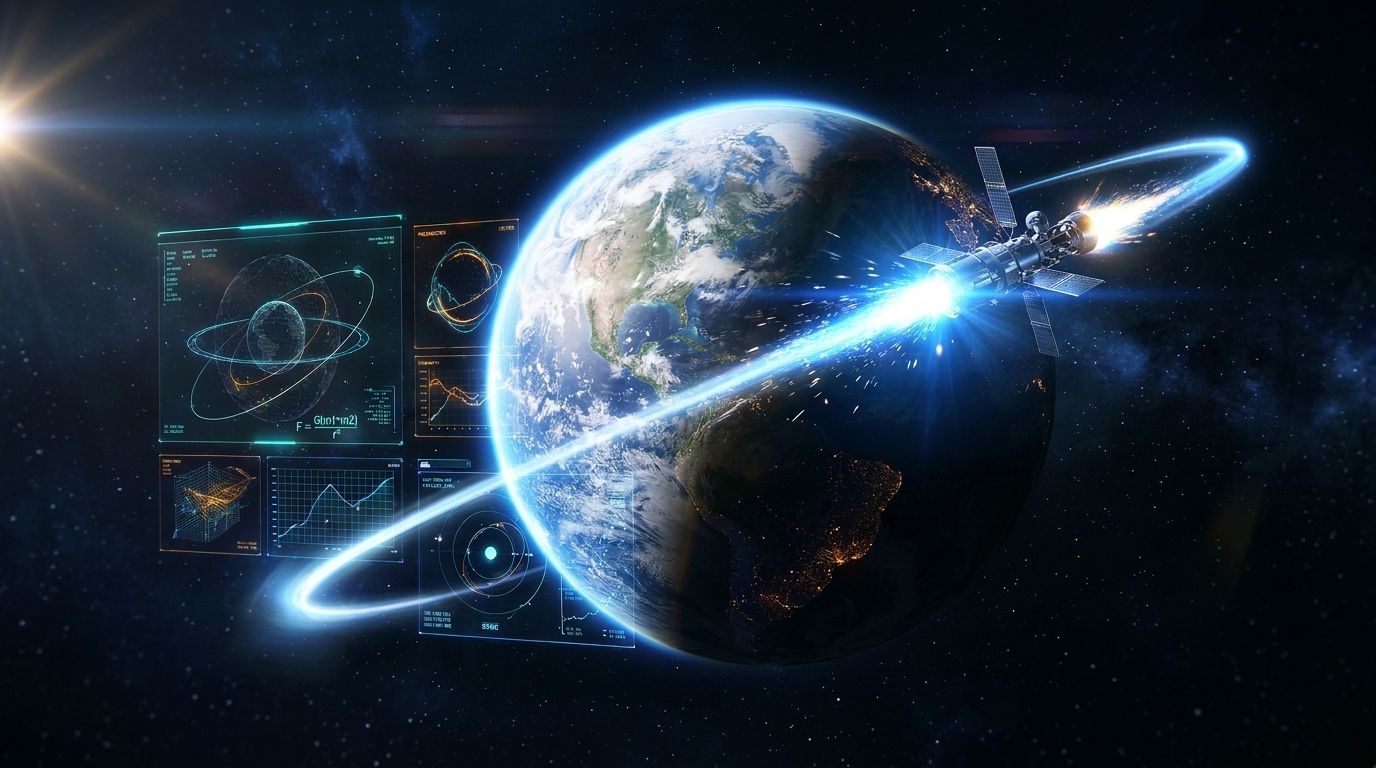
“Space isn't just about looking at planets; it's about understanding how they move. But making orbital physics look like a Hollywood movie is harder than it sounds.”
For centuries, learning about gravity meant staring at a textbook, drawing arrows on a piece of paper, and memorizing formulas like F = G(m₁m₂ / r²). While the math is beautiful, it rarely captures the sheer awe of a satellite orbiting a planet or the immense scale of a gravitational pull.
At Galaxander, our mission is simple: make space science accessible, interactive, and visually breathtaking. We didn't just want to build a physics calculator; we wanted to build a cinematic experience.
That is why we just pushed a massive visual and functional upgrade to our Gravity Lab.
Here is a look behind the scenes at how we turned a basic physics simulation into a photorealistic Mission Control experience that runs directly in your browser.
🌍 The Challenge: Visualizing the Invisible
The hardest part about simulating Newtonian mechanics is making it look real. A simple grey sphere doesn't inspire curiosity. We wanted users to feel like they were looking out of the window of the International Space Station (ISS).
To achieve this, we completely rebuilt the rendering engine for the lab:
- A Photorealistic Earth: We upgraded the central body with high-resolution textures. The Earth now features a dynamic cloud layer, a realistic day/night terminator line, and glowing city lights on the dark side of the planet.
- Atmospheric Glow: Using custom shaders, we added a glowing blue halo around the Earth, simulating how sunlight scatters through our atmosphere.
- Cinematic Trails: As the satellite orbits, it now leaves a glowing, fading trail of light behind it. This not only looks beautiful but visually maps out the invisible gravitational path in real-time.
[Insert Image: Close-up of the Earth with the new textures and HUD]
🛰️ The Rocket & The Data HUD
A simulation is only as good as the data it provides. We wanted our users to feel like aerospace engineers.
- The Satellite: We replaced the basic rocket model with a detailed, metallic satellite equipped with a glowing thruster. The satellite now dynamically tilts and rotates to always face the direction of its velocity.
- Mission Control HUD: On the right side of the screen, we built a sleek, semi-transparent Heads-Up Display (HUD). Here, you can see real-time telemetry:
- Kinetic & Potential Energy: Watch how energy changes as the satellite moves closer or further from Earth.
- Live Physics Controls: Adjust the Central Body Mass, Initial Velocity, and Distance using intuitive sliders. You can instantly see how changing the mass of the Earth affects the orbit of the satellite.
🎓 Why We Built This (The Educational Impact)
At Galaxander, we believe the future of EdTech isn't in watching videos; it's in interaction.
When a child (or an adult) plays with this Gravity Lab, they aren't just memorizing a formula. They are seeing the consequences of it. They can set the satellite's velocity too low and watch it crash into the Earth, or set it too high and watch it escape into deep space.
By turning abstract concepts into tangible, visual experiences, we hope to spark the next generation of astrophysicists and space explorers.
🚀 Explore It Yourself
The universe is vast, but it is now right at your fingertips. No downloads, no complex software. All you need is your browser.
We invite you to step into Mission Control. Adjust the sliders, launch the rocket, and watch the beautiful physics of our universe unfold.
👉 Experience the 3D Gravity Lab on Galaxander
Which orbital preset will you choose? Circular? Elliptical? Or will you let the satellite escape? Let us know in the comments below!
Galaxander Team
Dedicated to translating the mysteries of celestial mechanics, astrophysics, and deep space telemetry into compelling insights for stargazers across the globe.
More Cosmic Discoveries
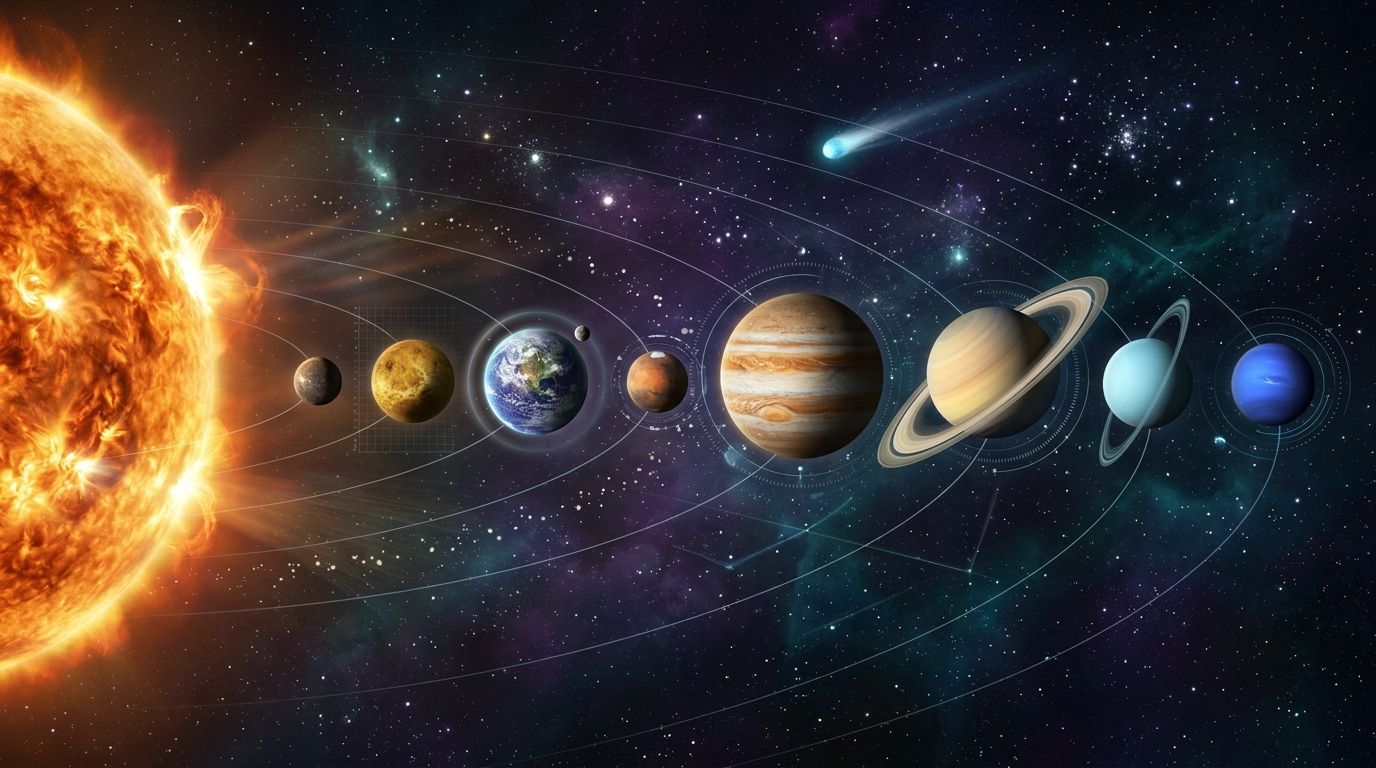
Explore the Solar System in 3D: A Journey Through Our Cosmic Neighborhood
Have you ever wanted to fly through space? Discover how our interactive 3D Solar System brings the planets, moons, and orbits directly to your screen.
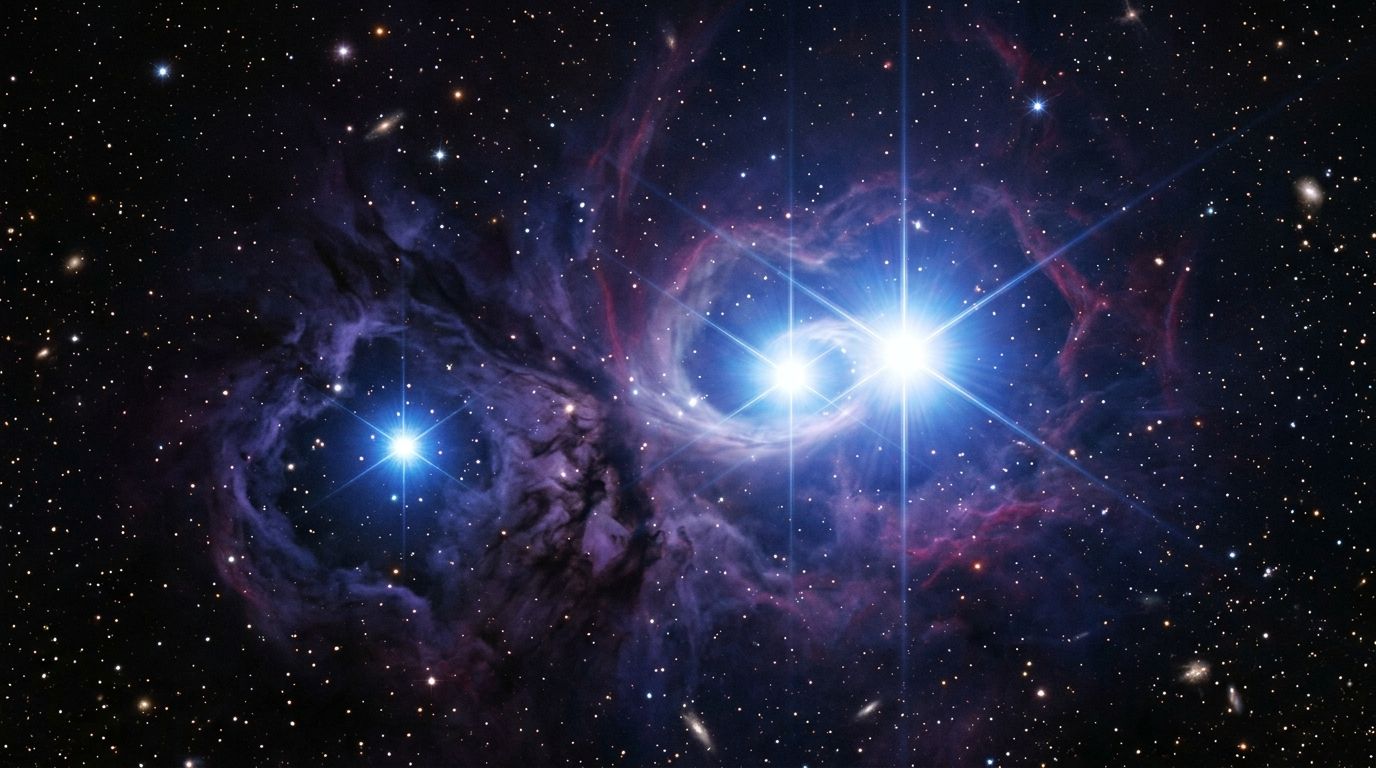
The Cosmic Plot Twist: Why Spica is Not Just a Binary Star, But a Triple System
For centuries, astronomers thought Spica was a simple pair of stars. But the universe had a plot twist. Discover the hidden third star in this dazzling triple system.